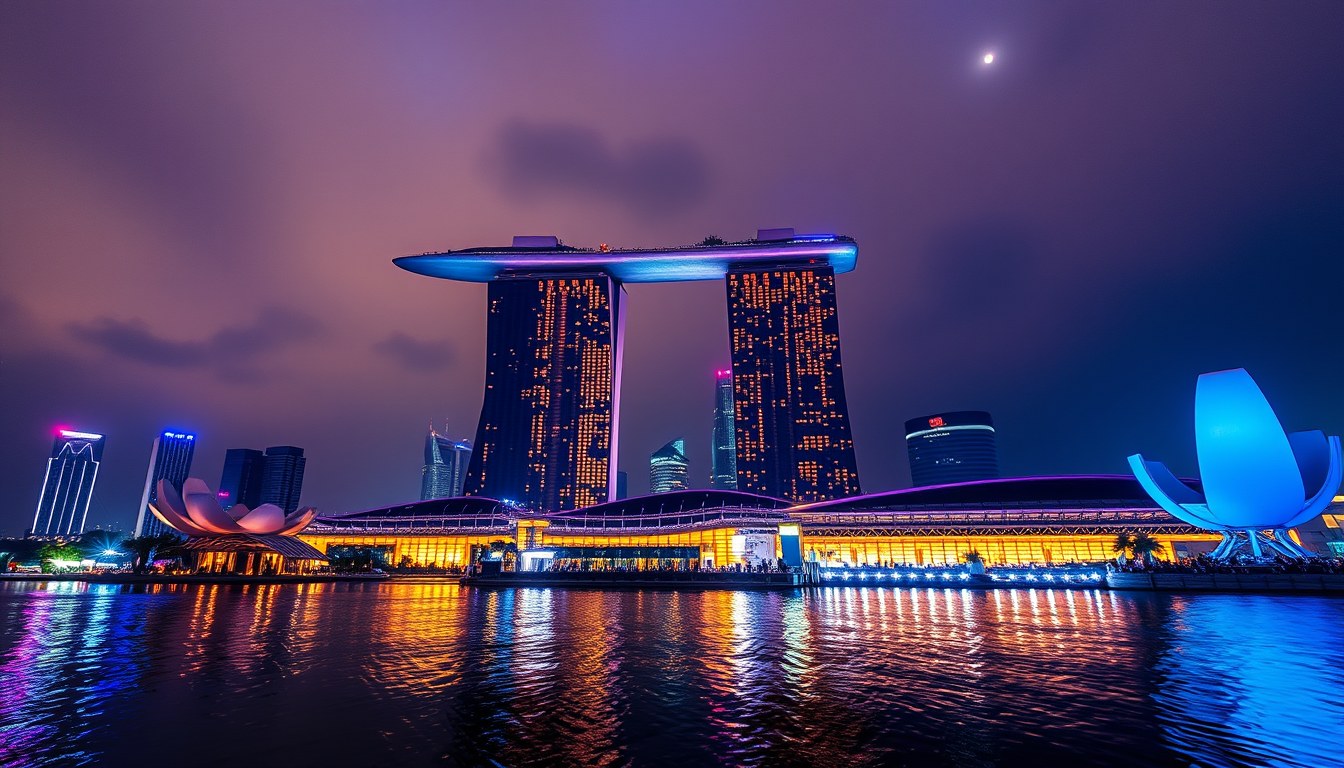
1 Day in Singapore
Your perfect day — from morning to evening
As summer's embrace begins to warm Singapore in May 2026, the city-state is a vibrant tableau of lush greenery and balmy breezes. Temperatures hover around 30°C during the day, with occasional afternoon showers that lend a refreshing touch to the tropical climate. Pack lightweight clothing, breathable fabrics like cotton or linen, and don't forget your umbrella for unexpected downpours.
May marks the start of exciting seasonal events. The Singapore Food Festival returns, celebrating the city's culinary diversity with street food stalls, gourmet feasts, and cooking demonstrations that will tantalize your taste buds. Meanwhile, the annual Night Festival dazzles visitors with stunning light installations across Marina Bay, transforming the skyline into a mesmerizing spectacle.
While the heat can be intense, May offers a unique blend of cultural richness and natural beauty. The lush Botanic Gardens are at their verdant best, while the cooler evenings provide an ideal time to explore bustling markets and nightlife scenes.
Top tips for your visit: Stay hydrated by carrying a refillable water bottle, invest in a good quality rain jacket or poncho, and make early reservations for dining experiences during the Food Festival. Enjoy the vibrant pulse of Singapore as it celebrates its multifaceted heritage under the warm sun of May!
Start your day by immersing yourself in Singapore’s vibrant culture at the Peranakan Museum, located at 39 Armenian Street, Singapore 019257. Open from 10 am to 7 pm daily, this museum offers a unique glimpse into the heritage and customs of the Peranakans, a distinct community with roots in China but also strongly influenced by Southeast Asian traditions. Spend about an hour here to get a sense of Singapore's rich cultural tapestry.
2. Hidden Gems: For a less crowded alternative to Orchard Road, explore Tiong Bahru, an area known for its retro aesthetics and fantastic coffee shops like 41A Tiong Bahru Food Court (39 Eng Hoon Street).
3. Free Tours: Singapore Tourism Board offers free walking tours that provide insights into the city's history and culture.
Post-lunch, head over to Marina Bay Sands, a must-visit for its spectacular views and diverse attractions. Start by taking a walk around the Marina Promenade or enjoy some retail therapy at The Shoppes. Once you've had your fill of shopping and people-watching, don't miss out on visiting the SkyPark Observation Deck (Level 57), which offers breathtaking panoramic views of Singapore's skyline. It’s open from 10 am to 8 pm daily.
End your day with a romantic dinner cruise on Rasa Dining Cruise, embarking from One Fullerton Pier 18 Marina Boulevard Singapore 019113. This dining experience offers panoramic views of the skyline as you sail along the Marina Bay, making it an ideal way to wind down after a full day of exploration.
1. Singapore Botanic Gardens: A UNESCO World Heritage Site, this garden is not just a place for nature lovers but also houses several attractions like the National Orchid Garden and the Ginger Garden.
2. Sentosa Island: Known for its beaches, Universal Studios Singapore, and the iconic Merlion Park, Sentosa offers endless entertainment options and stunning views of the city skyline.
Getting Around:
Singapore’s public transport system is one of the best in the world, with an extensive network of trains, buses, and taxis. The MRT (Mass Rapid Transit) covers most tourist areas efficiently. Consider purchasing a Singapore Tourist Pass for unlimited rides on public transport.
Best Time to Visit:
While Singapore can be visited year-round due to its tropical climate, the best times are from September to November or February to April when temperatures are slightly cooler and there's less rainfall.
Money Tips:
Singapore uses SGD (Singapore Dollar). Most places accept major credit cards but it’s always good to have some cash on hand. ATMs are widely available, and currency exchange services can be found at Changi Airport and other key locations.
Safety:
Singapore is generally considered safe with low crime rates. However, like any large city, take usual precautions such as being aware of your surroundings, especially when traveling alone late at night or in less frequented areas.